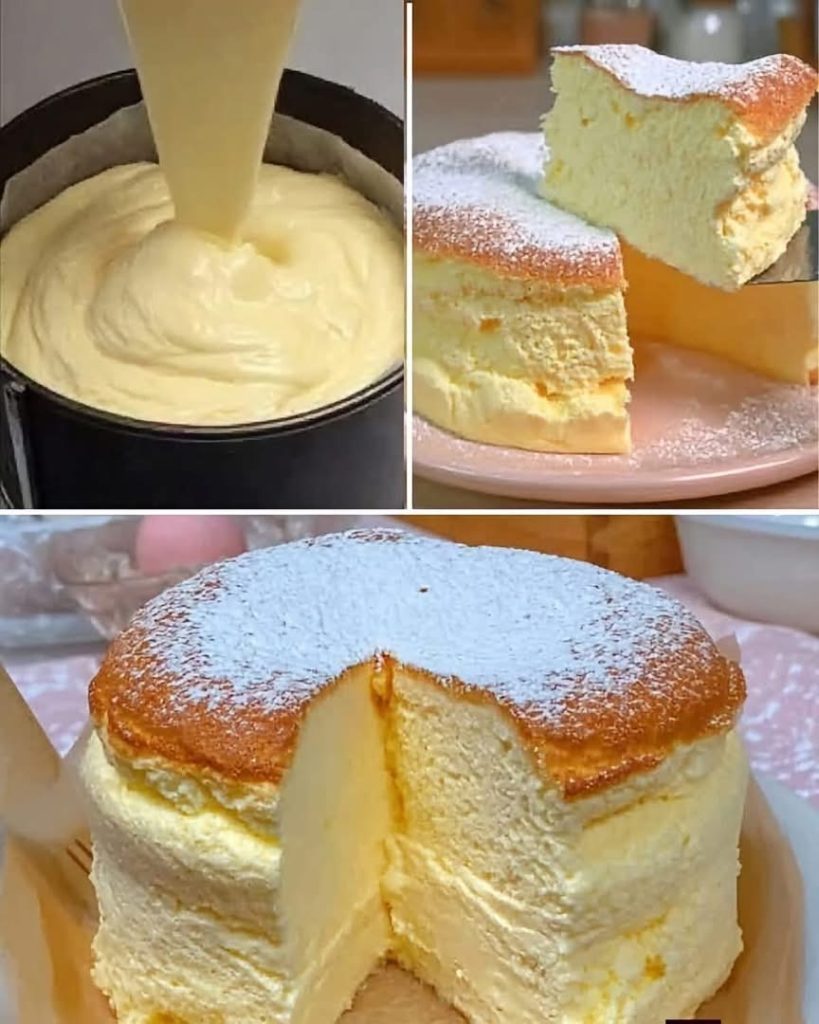
Craving a bakery-style dessert that feels as light as a cloud and melts effortlessly on your tongue? This fluffy Japanese cotton cheesecake combines the rich, tangy flavor of traditional cream cheese cake with the airy, delicate texture of a classic French souffle. Baked gently in a water bath and finished with a delicate dusting of powdered sugar, this tall, jiggly cheesecake is an impressive showstopper for afternoon tea, holiday gatherings, and special family celebrations.
Recipe Overview
| Detail | Information |
| Prep Time | 25 minutes |
| Cook Time | 1 hour 10 minutes |
| Total Time | 1 hour 35 minutes (plus cooling) |
| Servings | 8 slices |
| Cuisine | Japanese |
| Course | Dessert |
| Difficulty | Intermediate |
| Calories | 265 kcal per slice |
Why You’ll Love This Recipe
Unlike dense, heavy New York-style cheesecakes, Japanese cotton cheesecake uses whipped egg white meringue to create an ultra-light, sponge-like crumb that never feels overly rich. Every forkful is airy, moist, and subtly sweet. You only need six basic baking staples that are easy to find in any standard grocery store. There is no graham cracker crust to press or complicated pastry dough to roll out. The golden-brown top dusted with snow-white powdered sugar gives this cake a stunning café-quality presentation straight out of the oven. It looks like an artisan patisserie creation while remaining completely achievable in a home kitchen.
Ingredients
| Ingredient | Measurement | Preparation Notes |
| Full-fat cream cheese | 8 ounces (225g) | Softened to room temperature |
| Unsalted butter | 3.5 tablespoons (50g) | Room temperature, cut into cubes |
| Whole milk | 1/2 cup (120ml) | Room temperature |
| Large eggs | 6 eggs | Separated into yolks and whites, cold |
| Cake flour | 1/2 cup (60g) | Sifted twice for lightness |
| Cornstarch | 2 tablespoons (16g) | Sifted with the cake flour |
| Granulated white sugar | 1/2 cup (100g) | Divided (2 tablespoons for yolks, rest for meringue) |
| Fresh lemon juice | 1 tablespoon | Brightens the cream cheese flavor |
| Cream of tartar | 1/4 teaspoon | Stabilizes the whipped egg whites |
| Pure vanilla extract | 1 teaspoon | Optional for warm aroma |
| Powdered sugar | 1 tablespoon | For dusting the cooled cake |
Step-by-Step Instructions
- Prepare the Pan and Oven: Preheat your oven to 320°F (160°C). Grease a 7-inch or 8-inch round cake pan and line the bottom and tall sides with parchment paper so the paper extends 2 inches above the rim. Wrap the outside bottom of the pan tightly in two layers of heavy-duty aluminum foil if using a springform pan.
- Melt the Cream Cheese Base: Place a heatproof mixing bowl over a pot of gently simmering water (double boiler). Add the softened cream cheese, unsalted butter, and whole milk, whisking continuously until completely smooth and lump-free. Remove from heat and let cool slightly.
- Incorporate Egg Yolks and Flour: Whisk the 6 egg yolks, 2 tablespoons of granulated sugar, fresh lemon juice, and vanilla extract into the warm cream cheese mixture until silky. Sift in the cake flour and cornstarch, gently whisking just until smooth with no dry pockets.
- Whip the Meringue: In a clean, grease-free mixing bowl, beat the 6 egg whites and cream of tartar on medium speed until foamy. Gradually add the remaining granulated sugar one tablespoon at a time, beating until soft, glossy peaks form that gently curl over when the beaters are lifted.
- Fold the Batter Gently: Gently fold one-third of the whipped meringue into the egg yolk batter using a silicone spatula to lighten it. Fold in the remaining meringue in two additions using slow, sweeping motions until the batter is uniform and airy.
- Pour and Tap: Pour the velvety batter into the prepared parchment-lined cake pan. Gently tap the pan on the kitchen counter twice to release any large trapped air bubbles.
- Bake in a Water Bath: Place the cake pan inside a larger roasting pan and pour hot water into the roasting pan until it reaches 1 inch up the sides of the cake pan. Bake at 320°F (160°C) for 25 minutes until lightly golden, then reduce the oven temperature to 285°F (140°C) and bake for another 45 minutes until risen and set.
- Cool Gradually and Dust: Turn off the oven, crack the oven door open about 2 inches, and let the cheesecake rest inside for 15 minutes so it does not collapse. Remove from the oven, peel away the parchment paper, dust generously with powdered sugar, and slice.
Best Tips
Ensure your mixing bowl and beaters are completely free of any oil or egg yolk residue before whipping the egg whites. Even a tiny drop of fat will prevent the meringue from reaching full, fluffy volume. Stop whipping your egg whites at soft-to-medium glossy peaks rather than stiff, dry peaks. Over-whipped meringue is difficult to fold smoothly into the cream cheese base and causes the top of the cheesecake to crack in the oven. Never skip the gradual oven cooling step at the end of baking. Sudden exposure to cool kitchen air causes the delicate air pockets inside the souffle cheesecake to shrink rapidly.
Best Ingredient Options
- Cream Cheese: Full-fat brick-style cream cheese is essential for rich flavor and proper structure; avoid whipped or reduced-fat tub spreads.
- Cake Flour: Low-protein cake flour produces the signature fine, cotton-soft crumb. If unavailable, replace 1 tablespoon of all-purpose flour with 1 tablespoon of cornstarch and sift well.
- Eggs: Large eggs separate most cleanly when cold straight from the refrigerator, though the whites whip to highest volume once they warm slightly toward room temperature.
- Powdered Sugar: Confectioners’ sugar sifted through a fine mesh strainer creates an even, delicate snowy finish across the golden dome.
Recipe Variations
For a fragrant matcha green tea cheesecake, sift 1 tablespoon of culinary-grade matcha powder directly into the cake flour and cornstarch before folding it into the batter. If you love bright citrus desserts, fold 1 tablespoon of freshly grated lemon or yuzu zest into the egg yolk mixture for a refreshing tangy aroma. For a rich chocolate cotton cheesecake, melt 2 ounces of chopped dark chocolate together with the cream cheese, butter, and milk over the double boiler, and substitute 1 tablespoon of the cake flour with unsweetened cocoa powder.
What to Serve With
Serve warm or chilled slices alongside a bowl of lightly sweetened whipped cream and fresh macerated strawberries, raspberries, or blueberries. A warm pot of Japanese green tea, roasted hojicha, or freshly brewed Earl Grey tea pairs wonderfully with the subtle sweetness of this dessert. For an extra indulgent cafe-style plating, drizzle a spoonful of warm strawberry compote or honey lemon glaze over each slice right before serving.
Make-Ahead Instructions
Japanese cotton cheesecake can be baked up to 1 day in advance. Once the cake has cooled completely to room temperature, cover it loosely and chill in the refrigerator overnight, then wait to dust the top with powdered sugar right before serving so the sugar does not dissolve.
Storage
Store leftover slices of Japanese cheesecake in an airtight cake carrier or covered container in the refrigerator for up to 4 days. Keep it away from strong-smelling foods in the fridge, as the delicate sponge easily absorbs odors.
Reheating
- Microwave: Enjoy slices chilled straight from the fridge for a denser cheesecake feel, or warm a single slice on a microwave-safe plate for 10 to 15 seconds to restore its fresh-from-the-oven jiggly softness.
Freezing
You can freeze individual cooled slices of un-dusted Japanese cheesecake for up to 1 month. Wrap each slice tightly in plastic wrap followed by a layer of aluminum foil, freeze flat, and thaw overnight in the refrigerator before dusting with powdered sugar and serving.
Common Mistakes to Avoid
Using a pan with short sides without extending the parchment paper collar will cause the batter to overflow as it rises dramatically in the water bath. Always line the pan with tall parchment paper strips. Stirring the meringue aggressively into the cream cheese base deflates the tiny air bubbles that give this cake its signature height and cottony texture. Always use a gentle folding motion from the bottom of the bowl up and over. Opening the oven door during the first 50 minutes of baking releases steam from the water bath and causes the cheesecake to sink in the center. Use the oven window and light to check on your cake instead.
Nutrition Estimate
| Nutrient | Amount per Slice | % Daily Value |
| Calories | 265 kcal | 13% |
| Total Fat | 16g | 21% |
| Saturated Fat | 9.5g | 48% |
| Cholesterol | 175mg | 58% |
| Sodium | 165mg | 7% |
| Total Carbohydrates | 22g | 8% |
| Dietary Fiber | 0.2g | 1% |
| Total Sugars | 14g | — |
| Protein | 7g | 14% |
Frequently Asked Questions
Why did my Japanese cheesecake crack on top while baking? Cracking usually happens when the oven temperature is too high or the egg whites were whipped past soft peaks into stiff, dry peaks. Baking at a gentle temperature inside a water bath prevents surface cracking.
Can I eat Japanese cotton cheesecake warm or cold? Both ways are delicious. Served warm right after cooling slightly, it tastes like a light, fluffy egg souffle; served chilled after several hours in the fridge, it becomes slightly denser and tastes closer to a classic creamy cheesecake.
What if I do not have a springform pan? A standard solid-bottom round cake pan actually works even better because you do not have to worry about water from the bain-marie leaking through the bottom seam, and lining the pan with parchment paper lets you lift the cake out easily.
Final Thoughts
This fluffy Japanese cotton cheesecake delivers an unforgettable melt-in-your-mouth dessert experience with simple pantry ingredients and classic baking technique. Whether served warm with a fresh dusting of powdered sugar or chilled with fresh berries, this jiggly, cloud-like cake is sure to delight everyone at your table.
