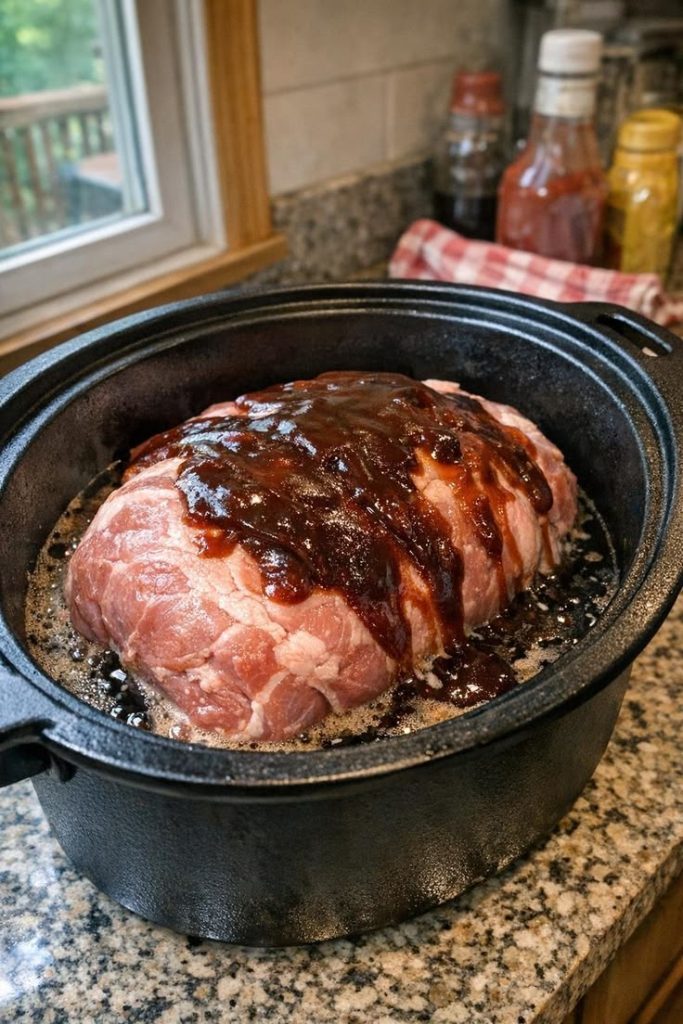
Preparing a restaurant-quality Sunday dinner at home requires the right cut of meat and a slow, steady cooking method. This Slow Cooker Barbecue Pulled Pork Roast transforms an affordable pork shoulder into tender, fall-apart shredded pork infused with smoky, tangy, and sweet flavors.
Using a heavy-bottomed cast-iron Dutch oven or a standard programmable slow cooker allows the tough connective tissues to break down completely over several hours. Whether you are planning weekly meal prep, hosting a backyard game-day gathering, or feeding a hungry family on a busy weeknight, this effortless dump-and-go dinner recipe delivers maximum flavor with minimal kitchen prep.
Recipe Overview
| Recipe Detail | Information |
| Prep Time | 15 minutes |
| Cook Time | 8 hours (Low) or 4 hours (High) |
| Resting Time | 15 minutes |
| Total Time | 8 hours 30 minutes |
| Servings | 10 servings |
| Calories | 410 kcal per serving |
| Cooking Method | Slow Cooker or Cast-Iron Dutch Oven |
| Cuisine | American Comfort Food |
Why You’ll Love This Recipe
This pulled pork recipe relies on simple pantry staples that you likely already have stocked in your kitchen cabinets. You do not need expensive smokers, specialized wood pellets, or hours of active grilling to achieve deep, authentic smokehouse flavor.
The hands-off cooking process makes this dish ideal for busy schedules and effortless entertaining. Once you season the pork butt and pour the savory liquid base and barbecue glaze into the pot, your kitchen appliance does all the heavy lifting while you focus on your day.
Pork shoulder is one of the most budget-friendly cuts of meat available at the grocery store, making this an economical choice for feeding a large crowd. A single four-pound roast yields plenty of leftovers that can be repurposed into tacos, stuffed baked potatoes, or toasted sandwiches throughout the week.
The balance of sweet brown sugar, tangy apple cider vinegar, and smoky spices cuts through the richness of the marbled pork. Every bite stays remarkably juicy because the meat braises gently in its own seasoned juices.
Ingredients
Pork Roast and Dry Rub
| Ingredient | Measurement | Notes |
| Boneless Pork Shoulder (Boston Butt) | 4 pounds | Trimmed of excess outer fat cap |
| Dark Brown Sugar | 2 tablespoons | Packed firmly |
| Smoked Paprika | 1 tablespoon | Adds deep smoky flavor |
| Garlic Powder | 2 teaspoons | Use fresh, aromatic spice |
| Onion Powder | 2 teaspoons | Enhances savory depth |
| Kosher Salt | 2 teaspoons | Coarse grain preferred |
| Coarse Black Pepper | 1 teaspoon | Freshly cracked |
| Dry Mustard Powder | 1 teaspoon | Adds subtle tangy heat |
Braising Liquid and Glaze
| Ingredient | Measurement | Notes |
| Thick Hickory Barbecue Sauce | 1 ½ cups | Divided (1 cup for cooking, ½ cup for serving) |
| Apple Cider Vinegar | ¼ cup | Tenderizes meat and balances sweetness |
| Low-Sodium Chicken Broth | ½ cup | Prevents scorching at the bottom |
| Worcestershire Sauce | 2 tablespoons | Adds rich umami flavor |
| Liquid Smoke | ½ teaspoon | Optional, for authentic pit-smoked aroma |
Step-by-Step Instructions
- Prepare the Pork Roast: Pat the 4-pound boneless pork shoulder completely dry using paper towels. Trim away any thick, hard pieces of fat on the exterior while leaving internal marbling intact for moisture.
- Mix the Dry Rub: In a small mixing bowl, whisk together the dark brown sugar, smoked paprika, garlic powder, onion powder, kosher salt, black pepper, and dry mustard powder until no lumps remain.
- Season the Meat: Massage the dry rub generously over every surface of the pork shoulder, pressing the spices firmly into the meat so they adhere well.
- Create the Braising Base: Pour the low-sodium chicken broth, apple cider vinegar, Worcestershire sauce, and liquid smoke into the bottom of your slow cooker insert or heavy-bottomed oval Dutch oven. Stir gently to combine.
- Position and Glaze the Pork: Place the seasoned pork roast directly into the liquid mixture with the fat side facing up. Pour 1 cup of the thick hickory barbecue sauce evenly over the top of the meat.
- Slow Cook Until Tender: Cover tightly with the lid. If using a slow cooker, cook on Low for 8 hours or on High for 4 to 5 hours. If roasting in an oven-safe cast-iron Dutch oven, bake covered at 300°F (150°C) for 4 hours. The pork is done when it reaches an internal temperature of 200°F to 205°F (93°C to 96°C) and shreds effortlessly with a fork.
- Rest and Skim Fat: Carefully transfer the cooked pork roast to a large cutting board and let it rest for 15 minutes. While the meat rests, skim off the excess rendered fat floating on top of the cooking liquid in the pot.
- Shred and Toss: Use two forks to shred the pork into bite-sized pieces, discarding any large pieces of unrendered fat. Return the shredded pork to the pot with the remaining warm cooking juices and stir in the final ½ cup of barbecue sauce until evenly coated.
Best Tips
Always check the internal temperature of the pork using an instant-read digital meat thermometer rather than relying solely on the clock. While pork is technically safe to eat at 145°F, tough cuts like pork shoulder require reaching at least 200°F for the collagen to melt into silky gelatin.
Resist the urge to lift the lid during the cooking process. Every time you open the slow cooker or Dutch oven, trapped heat and steam escape, which can add up to 20 minutes to your total cooking time.
Save the flavorful braising liquid at the bottom of the pot instead of draining it down the sink. Tossing the freshly shredded meat back into those reduced juices is the secret to keeping pulled pork moist on a buffet table.
Best Ingredient Options
Pork Cut Selection: Boston butt (upper shoulder) is the gold standard for pulled pork because of its rich intramuscular fat marbling. Picnic shoulder is a great secondary option, though it often comes with the skin attached and slightly less marbling.
Barbecue Sauce Varieties: Choose a thick, molasses-based hickory or honey barbecue sauce that clings well to the meat during cooking. Thin, vinegar-based Carolina sauces work best when stirred in after shredding rather than poured on top before roasting.
Vinegar Choices: Raw, unfiltered apple cider vinegar provides the cleanest acidity to cut through heavy pork fat. If you run out, white wine vinegar or a splash of fresh lemon juice will perform a similar tenderizing role.
Recipe Variations
For a spicy Texas-style kick, add one teaspoon of cayenne pepper and half a teaspoon of crushed red pepper flakes to the dry rub. You can also stir diced pickled jalapeños directly into the finished shredded pork just before serving.
If you prefer a sweet and tangy Hawaiian-inspired profile, swap the chicken broth for canned pineapple juice and use a sweet teriyaki-style barbecue glaze. Serve the finished meat on toasted sweet Hawaiian slider rolls topped with grilled pineapple rings.
To make a low-carb or keto-friendly version, omit the brown sugar from the dry rub and select a sugar-free barbecue sauce sweetened with monk fruit or stevia. The resulting dish delivers all the smoky richness without added sugars.
What to Serve With
Classic brioche hamburger buns or soft potato rolls are the most popular way to serve pulled pork sandwiches. Toast the inside of the buns lightly with butter so they hold up well against the saucy meat without becoming soggy.
Creamy southern coleslaw is an essential pairing that adds a crisp, cool crunch to every bite. You can serve the slaw on the side or pile a generous spoonful directly on top of the pork inside your sandwich.
Traditional cookout side dishes like baked mac and cheese, honey cornbread muffins, and smoky baked beans round out the meal. For a lighter accompaniment, serve the pork alongside vinegar-based cucumber salad or roasted corn on the cob.
Make-Ahead Instructions
You can apply the dry rub to the pork shoulder up to 24 hours in advance. Wrap the seasoned roast tightly in plastic wrap and store it on a rimmed plate in the refrigerator overnight to allow the salt and spices to penetrate deep into the meat.
The entire recipe can also be cooked completely one to two days before your event. Shred the pork, mix it with the cooking juices, and refrigerate it in a covered container until you are ready to reheat and serve.
Storage
Allow the shredded pulled pork to cool to room temperature within two hours of cooking to ensure proper food safety. Transfer the meat along with plenty of its cooking juices into an airtight glass or plastic food storage container.
Properly stored pulled pork will stay fresh in the refrigerator for 3 to 4 days. Keeping the meat submerged in a small amount of broth or sauce prevents the edges from drying out while chilled.
Reheating
Stovetop Method: Place the desired portion of pulled pork into a skillet over medium-low heat with two tablespoons of chicken broth or water. Cover with a lid and simmer gently for 5 to 7 minutes, stirring occasionally, until heated through to 165°F.
Oven Method: Transfer the pork to a baking dish, splash with a little extra barbecue sauce and broth, and cover tightly with aluminum foil. Bake at 325°F (165°C) for 20 minutes until hot and steaming.
Microwave Method: Place a single serving in a microwave-safe bowl, cover with a damp paper towel to trap moisture, and heat in 45-second intervals until warmed through.
Freezing
Pulled pork is one of the best freezer-friendly meals for long-term meal planning. Once the shredded meat has cooled completely, portion it into heavy-duty freezer-safe zip-top bags along with a few spoonfuls of the braising liquid.
Press out as much air as possible before sealing the bags flat to save freezer space. Label with the date and freeze for up to 3 months. Thaw frozen pulled pork overnight in the refrigerator before reheating on the stovetop.
Common Mistakes to Avoid
Using a lean cut of meat like pork tenderloin or center-cut pork loin chops is the most frequent error when making pulled pork. Lean cuts lack the necessary fat and connective tissue to break down, resulting in dry, stringy meat rather than tender shreds.
Pulling the meat out of the cooker too early will leave you with chewy chunks that refuse to shred easily. If the forks meet resistance when you try to pull the meat apart, put the lid back on and give it another 30 to 45 minutes of cooking time.
Overloading the pot with excessive liquid will dilute the bold flavors of your dry rub and barbecue sauce. Remember that the pork itself releases a significant amount of natural juices as it cooks down.
Nutrition Estimate
| Nutrient | Amount Per Serving (1/10th of recipe) |
| Calories | 410 kcal |
| Protein | 34 g |
| Total Fat | 21 g |
| Saturated Fat | 7 g |
| Carbohydrates | 20 g |
| Dietary Fiber | 1 g |
| Total Sugars | 17 g |
| Sodium | 890 mg |
| Cholesterol | 115 mg |
Frequently Asked Questions
Should I cook pulled pork fat side up or fat side down? Cooking the pork roast with the fat side facing up allows the fat to melt slowly and baste the meat from above throughout the cooking process. This keeps the top surface moist and prevents the dry rub from burning.
Do I need to sear the pork shoulder before putting it in the slow cooker? Searing the seasoned roast in a hot skillet for 3 minutes per side adds an extra layer of caramelized flavor, though it is completely optional. This recipe is designed to work wonderfully without searing to save you extra dishes and prep time.
Why is my pulled pork tough even after cooking for hours? Tough pulled pork is almost always undercooked rather than overcooked. Tough collagen fibers do not start breaking down rapidly until the meat spends time above 195°F, so extending the cook time will solve the issue.
Can I use frozen pork shoulder for this recipe? For food safety reasons, you should never place a completely frozen roast into a slow cooker, as it spends too much time in the bacterial danger zone while thawing. Always thaw your pork shoulder safely in the refrigerator for 24 to 48 hours beforehand.
Final Thoughts
Mastering a foolproof Slow Cooker Barbecue Pulled Pork Roast gives you an incredible go-to recipe for effortless family dinners, holiday potlucks, and weekly meal prep. With just a handful of pantry spices, a bottle of your favorite barbecue sauce, and a reliable slow cooker or Dutch oven, you can create tender, flavorful shredded pork that rivals your favorite local smokehouse.
Whether you pile it high onto buttered brioche buns with tangy coleslaw or serve it over cheesy grits and roasted vegetables, this versatile dish is guaranteed to become a staple in your recipe collection.
